Posts

Where Do You Draw the Line? by Martine Hackett

Image
In the spring of 2020, New York City was the epicenter of the COVID-19 pandemic in America. The net out-migration from the city increased by an estimated 130,837 from March 2020 through June 2021, as compared to pre-pandemic trends. People moved out of the city to avoid the spread of disease in crowded spaces, seeking safety and space in the suburbs. Residents from the city’s wealthiest neighborhoods were the most likely to leave. By leaving the city to avoid this infectious virus and terrifying disease, the people who left followed a pattern that has existed for hundreds of years. Fleeing dense urban spaces for the clean air, open space, and the healing properties of nature. What they did was cross a line, between city and suburb, a line that was not physical but psychological, that holds significance in its power to separate. The practice of public health has long seen that separating or using what was originally a public health term, segregating the sick from the well can...

HOLA Club's Impact on the Hofstra Community by Ariadne Morales

Image
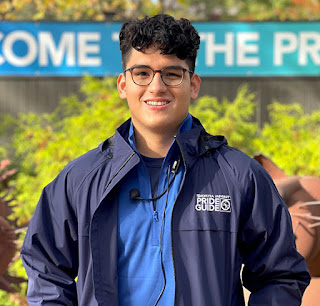
The HOLA club (Hofstra’s Organization of Latin Americans) at Hofstra University has had a major impact on many students for years. This organization has been the one to help me the most throughout my young college career. As a young latina woman who studies sports journalism, which is a male dominated area, I feel that the HOLA club has become a safe space for myself where I can feel accepted. In many of my extra curricular activities and classes that revolve around sports journalism, I am usually one of the few girls out of all white male students. Being in a room and being the only woman or person of color can sometimes feel a bit intimidating, however, organizations such as the HOLA club can make those experiences better when having someone to talk to and relate to. In many cases, there are situations where students feel they don't fit in. It is important for students to have a place on campus where there is a sense of belonging for them. The HOLA club embraces all types of Lati...

Reflections On My Journey to Hofstra from a Socio-Economic Perspective by Miguel Giral

Image
“Why not?” The question I always ended up asking myself every time I left my high school guidance counselor’s office. Why was it that Hofstra was a school that I had to forget about or move to the side, or categorize as a “reach” school? The effort I put into doing well in all of my courses, the time that I spent in clubs and at practice and games, the relationships I built with teachers, and faculty to have the best opportunities for solid recommendation letters were all not good enough for this school all of a sudden. Well, that’s what I thought. Silly of me not to realize that it was not because of my transcript or personality or anything that had to do with me personally. I just could not afford it, along with most of my friends in high school. I was a minority student living in a neighborhood where although I had everything I could ever wish for and more, it is not typical to afford a school as expensive as Hofstra. The students I surrounded myself with were all high-caliber stude...

Hiring Discrimination: The Effects of Nationality and Domestic Experience on Candidates’ Opportunity to Demonstrate Professional Value during Interview

Image
Aditi Rabindra Sachdev a , Kevin P. Nolan b , Nicholas P. Salter b , & Comila Shahani-Denning b a PepsiCo, Inc b Department of Psychology, Hofstra University On September 30, 2020, Aditi Rabindra Sachdev presented her collaborative research on hiring discrimination at the Center for “Race” Colloquia Series. Held on the last Wednesday of every month during the academic year, in these colloquia, Hofstra faculty members are invited to present their recent publications and engage with new scholarship focusing on race, culture and social justice. Below is a summary of their research findings.

“Achieving Life Balance as a Work-Study Student During the Pandemic” by Miguel Giral

Image
  As I sat in my house writing a similar blog post last semester, I would not have expected that I would be at Hofstra just a few months later attending some in-person classes and working two jobs on campus. My pessimistic self-imagined that our nation would take a lot longer to solve some of the problems that were thrown at us by the COVID-19 pandemic. Nonetheless, the Hofstra environment has definitely changed and it is odd walking around and seeing people wearing masks and being so far away from one another, but the students and faculty seem to be working together to adjust to this idea of a “new normal.” Ultimately, there have been some things that Hofstra has done well and some things that it could improve on, but this is an experience that very few of us will ever forget.

“Adjusting to This New Lifestyle” by Warlyn Ramirez

Image
COVID-19, Coronavirus, has affected everyone’s life in one way or another. It has been nine months and three days—at the day I am writing this—since the first COVID-19 case was found in the United States and since then, everything has transformed into a snowball, getting bigger and bigger. However, even though it was much difficult at the beginning, it seems as if everybody is adjusting and accepting a lifestyle with COVID-19. Some of these “adjustments” that society has made include adjusting economically, personally, and academically. In this blog entry, I will be reflecting on the adjustments that I have had to do in my personal life. The whole world's economy was impacted by this pandemic, especially communities inhabited majorly by minorities. Since the pandemic started, I left the Hofstra University Campus and went back home to the Bronx, New York. Here, my family and I encountered a situation that many people were enduring as well; everyone was losing their jobs in a city ...

“What We Say” by Daniel Alexandre

Image
PLEASE ACCESS VIDEO HERE: https://www.youtube.com/watch?time_continue=8&v=uPKZbejuHMs&feature=emb_logo (Words, music and production by Daniel Alexandre) QUESTIONS BY  TERENCE RYAN Music/melody or words come first? The melody came first. I remember it sort of buzzing in my head. It was very dramatic and heavy but I didn't have the words just yet. I will say that the words came almost immediately after the melody. What was going through your mind at the time of creating? I was feeling overwhelmed by all the videos and images of police treating civilians like prey. I was tired of answering text messages from my well-intending white colleagues. I was surprised to find out how many of my Facebook friends were asking "Why is it 'Black Lives Matter'? Why can't we say All Lives Matter?" What was your goal in releasing the song?  When we started putting the video together, it became so much more about sharing the video...