Posts

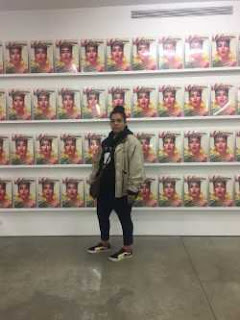
Queering Latinx: Intersectionality Matters by Michelle Boo, Center’s Fellow since September 2018
Image
When Kimberle Crenshaw coined the term intersectionality in 1989, the term became an integral part of Black feminism. Crenshaw refers to intersectionality as “ the various ways in which race and gender interact to shape the multiple dimensions of Black women's employment. ” Of course, intersectionality doesn’t only apply to Black women. The word intersectionality was created to convey that no identity exists independent of itself, in relation to race. This means that intersectionality is clearly a race theory that explains how race affects the oppression of other marginalized identities an individual might have.   This concept ties into the idea of strategic essentialism first introduced by the Indian literary critic and theorist Gayatri Chakravorty Spivak. Strategic essentialism is a tactic employed by a minority group acting on their shared identity in the public area in the interests of unity during a struggle for equal rights. Because of strategic essentialism queer people ...

Don’t Take Anything for Granted By Obed Nkum, Student Fellow at the Center (Fall 2018)

Image
You wake up in the morning, the first thing you do is to check your phone. You have no Chinese friends, you know nobody from the Congo, but that’s where the minerals came from. Your phone was made in China, but the company is based in California. You drink water that you didn’t collect nor process yourself. You switch the lights on, but you didn’t do well in science, circuits baffled you. You look in the mirror as you brush your teeth, you know nothing technical of glass making, plumbing, toothpaste or brushes. You take a shower using black soap, you don’t know how it got to you or where it came from. Your towel was made somewhere, you dry your skin, reaching for the coconut oil: it says made in Brazil, but you have never been there.   Time keeps flying by as usual, you’re hungry now, throwing your clothes on. Labels are not a big deal to you, but they were made somewhere far from where you reside. Running down the stairs, you grab the handrail, wood from an area in America wher...